> For the complete documentation index, see [llms.txt](https://docs.zapsign.com.br/llms.txt). Markdown versions of documentation pages are available by appending `.md` to page URLs; this page is available as [Markdown](https://docs.zapsign.com.br/zapsign-api/espanol/webhooks/probar-webhooks-en-zapsign.md).
# Probar webhooks en ZapSign
Puedes registrar **tantos webhooks como necesites** en ZapSign. Para facilitar las pruebas sin tener que configurar un servidor local, herramientas como **Webhook.site** son una excelente opción. Estas herramientas te permiten capturar y visualizar eventos recibidos por la API de forma rápida, ideal para depurar y validar webhooks en tiempo real.
### 1. Crea un webhook en Webhook.site
* **Paso 1:** Ingresa a [Webhook.site](https://webhook.site).
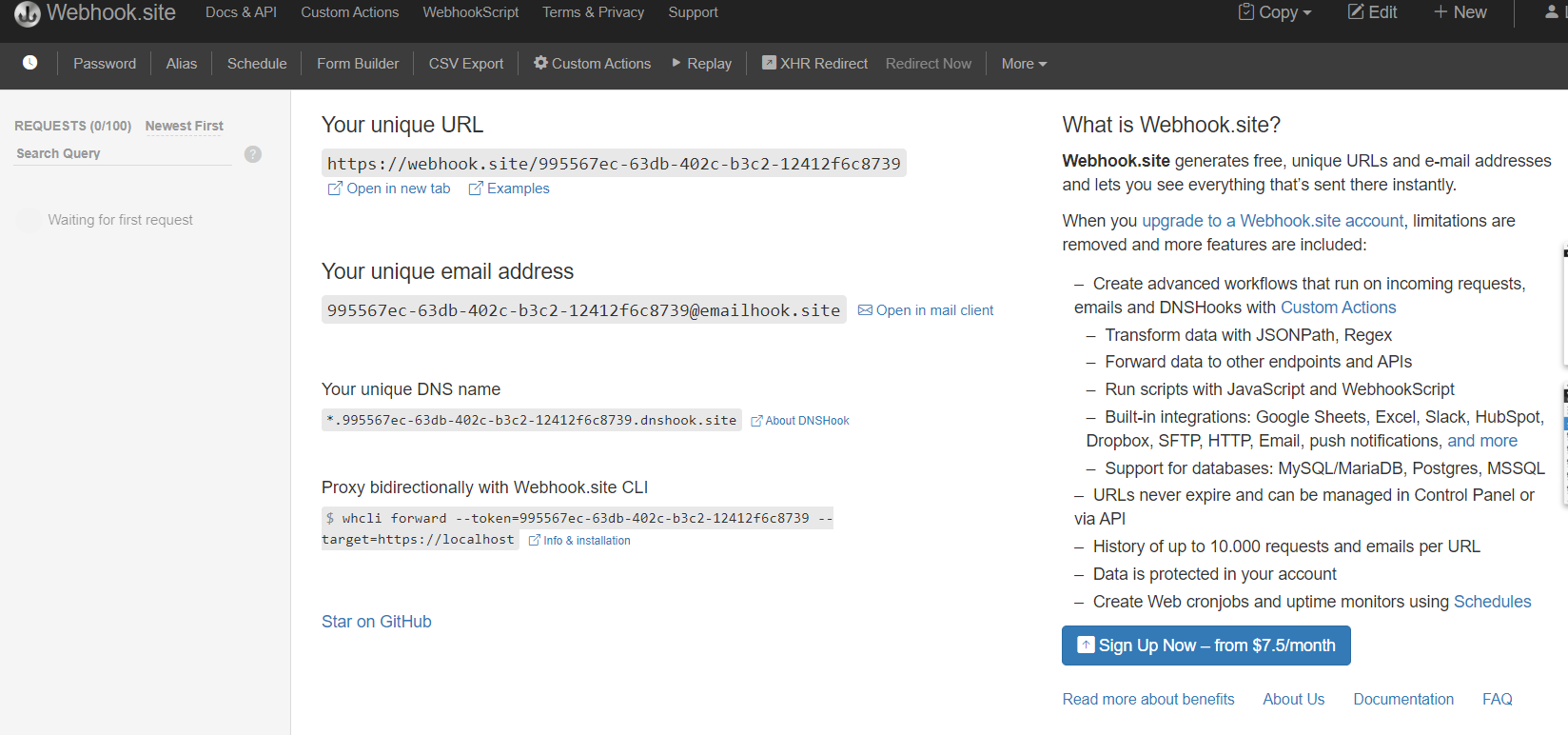
* **Paso 2:** En la página principal, verás una URL única generada automáticamente. Esta será tu endpoint para recibir los webhooks.
**Importante:** Mantén esta pestaña abierta, ya que aquí podrás visualizar los datos enviados por el webhook de ZapSign.
### 2. Configurando el webhook en ZapSign
* **Paso 1:** Accede a tu cuenta de ZapSign en el entorno de producción o sandbox.
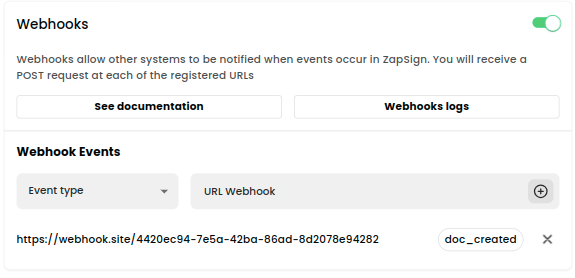
* **Paso 2:** Dirígete a **Ajustes > Integraciones > API ZapSign > Webhooks**.
* **Paso 3:** Agrega la URL generada por Webhook.site en el campo donde ZapSign solicita el endpoint del webhook. Define los eventos para los cuales deseas recibir notificaciones y haz clic en **"+"** para añadir la dirección.
You can register as many webhooks as you like.
### 3. Generando un evento en ZapSign
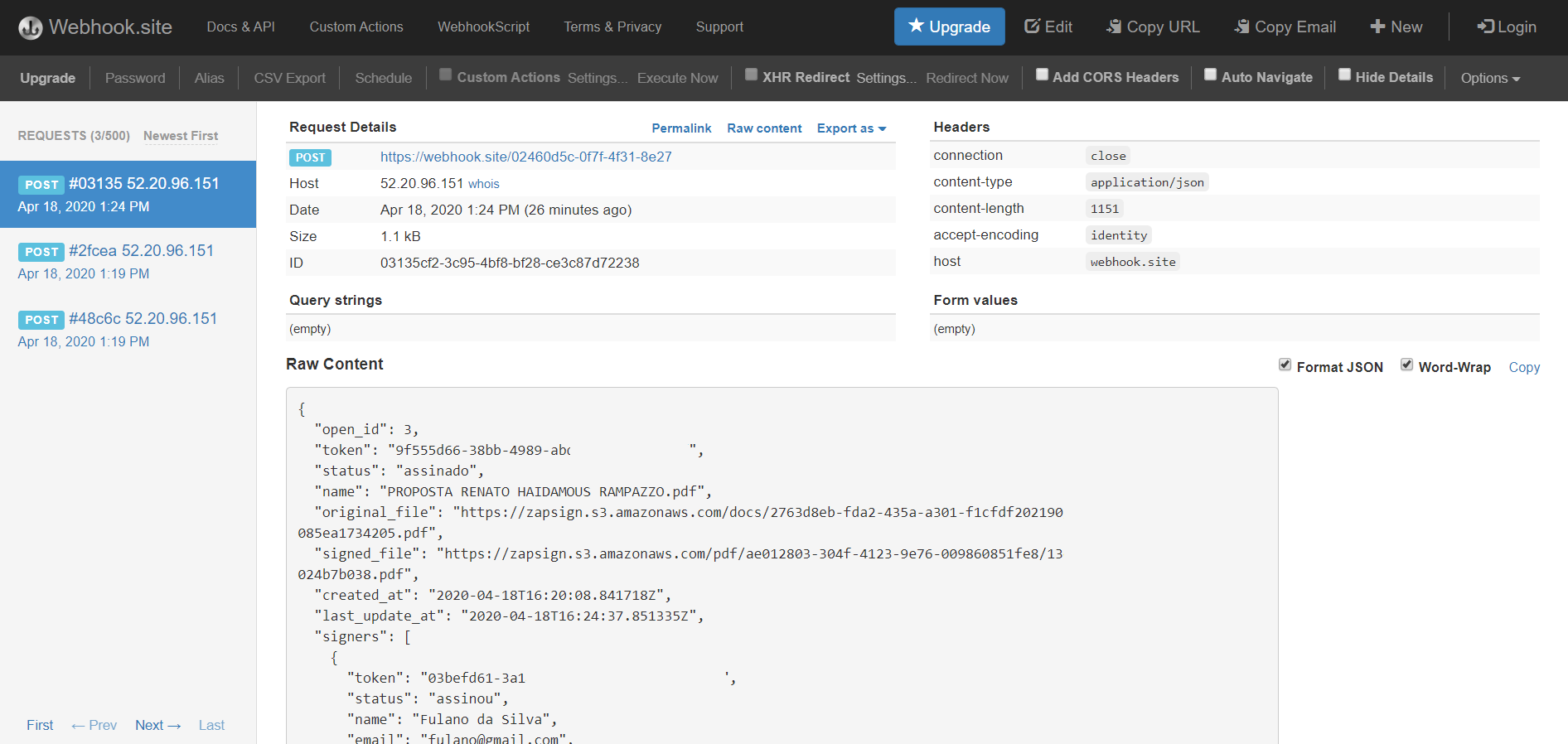
Crea un documento o genera un evento en ZapSign. Luego, revisa Webhook.site para verificar la solicitud POST recibida. En ella encontrarás todos los detalles del evento, como:
* ID del documento.
* Estado del documento.
* Payload completo con los datos enviados.
**Ejemplo de solicitud recibida en Webhook.site**
Cuando recibas la notificación, podrás visualizar de manera clara toda la información asociada al evento, facilitando el proceso de validación y prueba.
Example of a webhook request received on webhook.site.
En el próximo capítulo, exploraremos con más detalle cómo crear webhooks, tanto desde la interfaz web como mediante la API. 🚀
---
# Agent Instructions
This documentation is published with GitBook. GitBook is the documentation platform designed so that both humans and AI agents can read, navigate, and reason over technical content effectively. Learn more at gitbook.com.
## Querying This Documentation
If you need additional information that is not directly available in this page, you can query the documentation dynamically by asking a question.
Perform an HTTP GET request on the current page URL with the `ask` query parameter, and the optional `goal` query parameter:
```
GET https://docs.zapsign.com.br/zapsign-api/espanol/webhooks/probar-webhooks-en-zapsign.md?ask=&goal=
```
`ask` is the immediate question: it should be specific, self-contained, and written in natural language.
`goal` is optional and describes the broader end goal you are ultimately trying to accomplish on behalf of the user. GitBook uses it to tailor the answer towards what is most useful for that goal.
The response will contain a direct answer to the question and relevant excerpts and sources from the documentation.
Use this mechanism when the answer is not explicitly present in the current page, you need clarification or additional context, or you want to retrieve related documentation sections.